



Walk-In Shower vs Wet Room: Which Is Right for Your Bathroom?
Replacing a bath or an old shower cubicle is one of the most popular bathroom upgrades in Ireland. The two modern options people ask about most are the walk-in shower and the wet room. They look similar, but they are built differently and suit different homes. This guide explains the difference so you can make the right choice.
What is a walk-in shower?
A walk-in shower is an enclosure with an open entrance and no door. It usually has a fixed glass screen, and sits on either a low-profile shower tray or a level-access base. The rest of the bathroom floor stays dry, and the glass keeps most of the water inside.

What is a wet room?
A wet room has a fully waterproofed floor and walls, with the floor sloping slightly to a drain. There is no tray, and the whole room is designed to get wet. A glass panel or screen is often used to contain most of the spray, but it is not strictly required.

Walk-in shower vs wet room: the main differences
Space and layout
A walk-in shower works well in almost any bathroom, including small ones, because it simply replaces a bath or cubicle. A wet room can make a small room feel larger because there are fewer visual breaks, but you do need enough floor area to keep the water where it should go.
Installation and waterproofing
This is the biggest difference. A wet room needs the whole area tanked (sealed) and the floor formed to fall towards the drain. That usually means more labour and more care, particularly on timber floors, so it is a job for an experienced installer. A walk-in shower is generally simpler, since the tray or base does most of the waterproofing.
Cost
Because of the extra preparation, a wet room usually costs more to fit than a walk-in shower. Your total will depend on your floor construction, drain position and tiling, so it is best to get a quote after a site visit.
Accessibility
Both can be step-free, which makes them a good choice if you want a bathroom that stays practical as you get older or if mobility is a concern. A wet room with a level floor offers the most flexibility.
Splashing and drying
The size and position of the glass screen on a walk-in shower makes a big difference to splashing. In a wet room, expect more water on the floor and walls, which is why good ventilation, quality tiling and slip-resistant surfaces matter.
Style
Walk-in showers suit framed or frameless glass in chrome, black or brushed finishes. Wet rooms give a minimalist, spa-like look with continuous tiling from floor to wall.
Which should you choose?
- Choose a walk-in shower if you want a simpler installation, are working with a standard bathroom, or want to keep costs down.
- Choose a wet room if you want a completely seamless look, need level access, and are happy to invest in proper waterproofing.
If you are short on space, our small bathroom ideas include more ways to get the most from your layout. You can also browse our shower range and our taps and shower valves.
Walk-in shower and wet room FAQs
Is a wet room more expensive than a walk-in shower?
Usually, yes, because of the waterproofing and floor preparation. The final cost depends on your home and the finish you choose.
Do walk-in showers need a door?
No. The opening is the point, though a larger screen and a well-placed shower head help keep splashing down.
Can I have a wet room on an upper floor?
Often, yes, but timber floors need careful preparation and proper tanking. Get advice from an experienced installer before you decide.
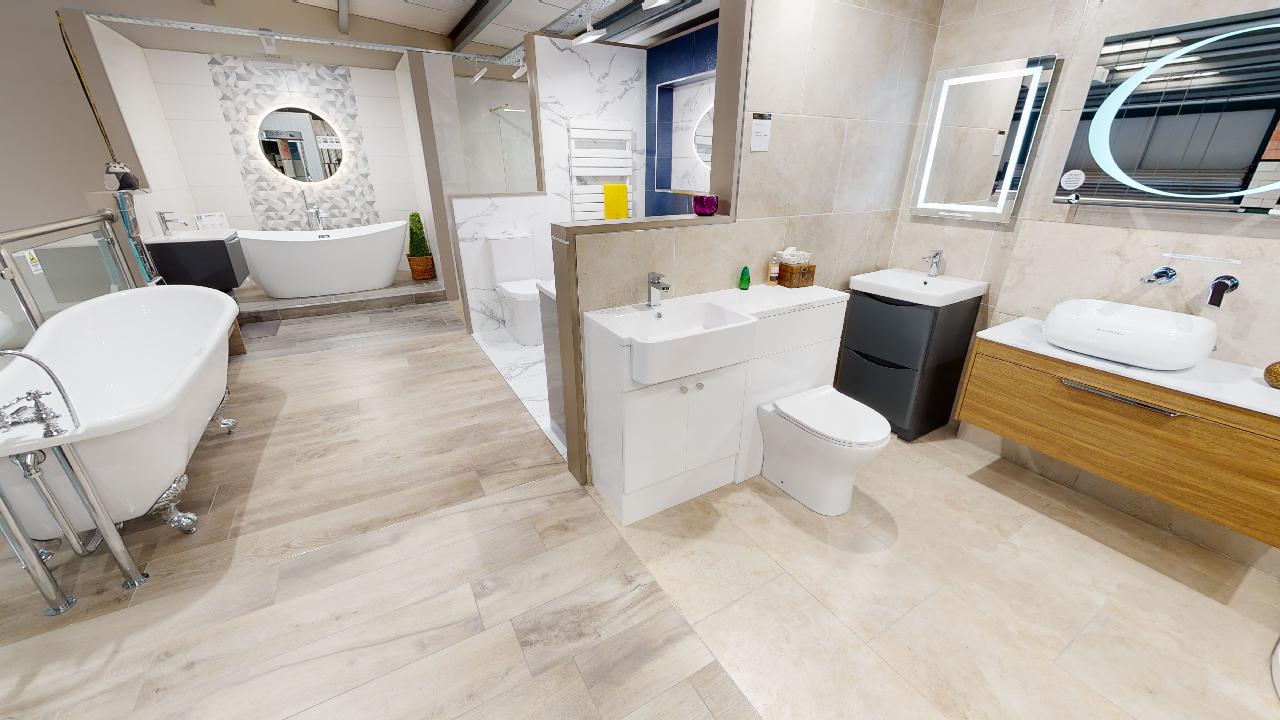
Want to see these ideas in person? Visit our showroom at Mullingar Business Park, Co. Westmeath, or book an appointment and our team will talk you through your options. You can also get in touch with any questions.